
From 1 November 2026, EU customs will need three product identifier codes, or PIDs, for every product on imports into the EU worth €150 or less. Here's who it applies to, what the codes are, and how to add them to your shipments.
PID codes give EU customs more detail about each product coming into the EU. Every product needs three of them: your SKU, the manufacturer's model number, and the barcode number. Without them, a shipment can be held at customs, can't enter the EU, and may be returned to you.
You'll need PID codes when all of these are true:
Samples, gifts, repairs and replacements aren't sales, so they don't need PID codes.
A product sold in different sizes or colours needs codes for each version. Codes for a batch or a single item can't be used.
If you resell a product, you can use the manufacturer's model number as your SKU, as long as you have their permission. If you sell on a marketplace, use the marketplace's own code for the product as its SKU (M-PID).
For goods under certain HS codes, you can type the words M-PID and NS-PID instead of real codes: chapters 1 to 15, 9701 to 9706, and some handmade wood, basketwork, paper, carpets, lace and glass. The HS code decides, not who made the product, so an artist selling their own painting qualifies.
These still need codes. Use the codes of the original product.
If you're sending to a VAT-registered business, enter its VAT number in the Delivery Address. You won't be asked for PID codes.
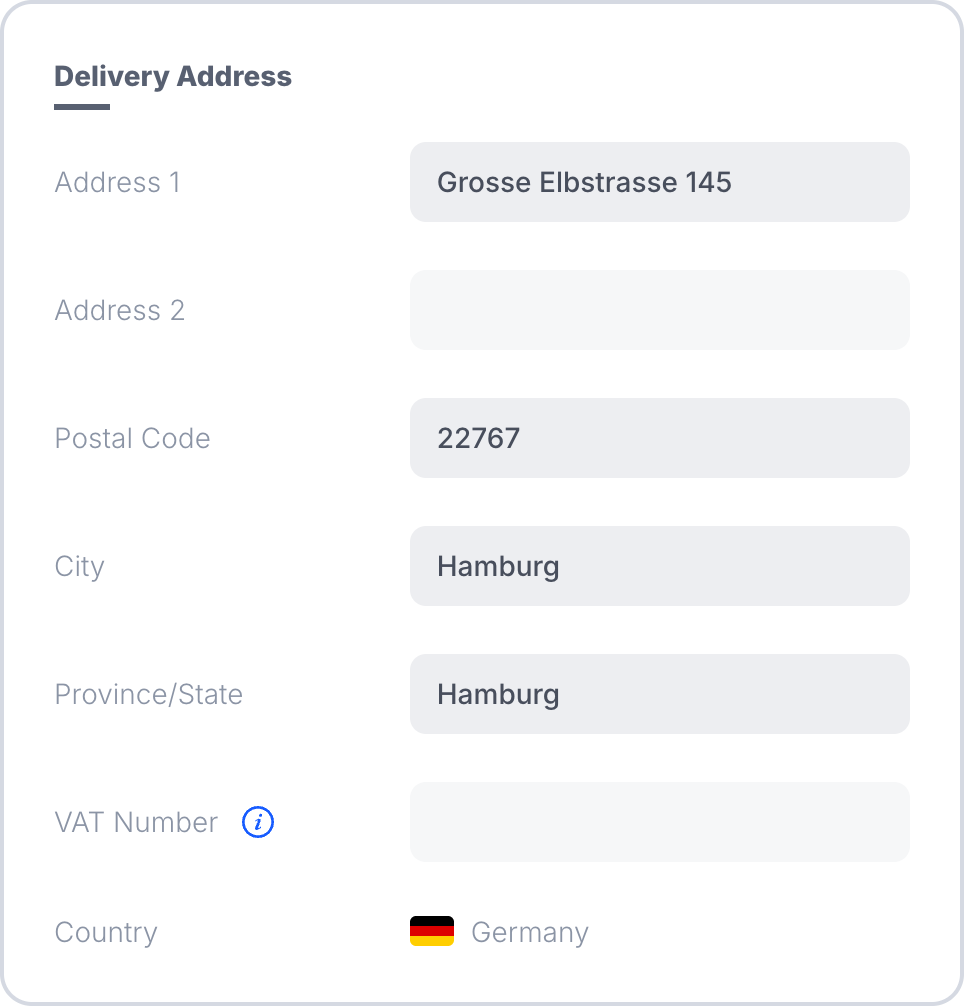
When the codes are needed, a message in Commodities tells you, and a Product codes section appears under your products. Enter the SKU (M-PID), Manufacturer's model number (NS-PID) and Barcode number (S-PID) for each one.
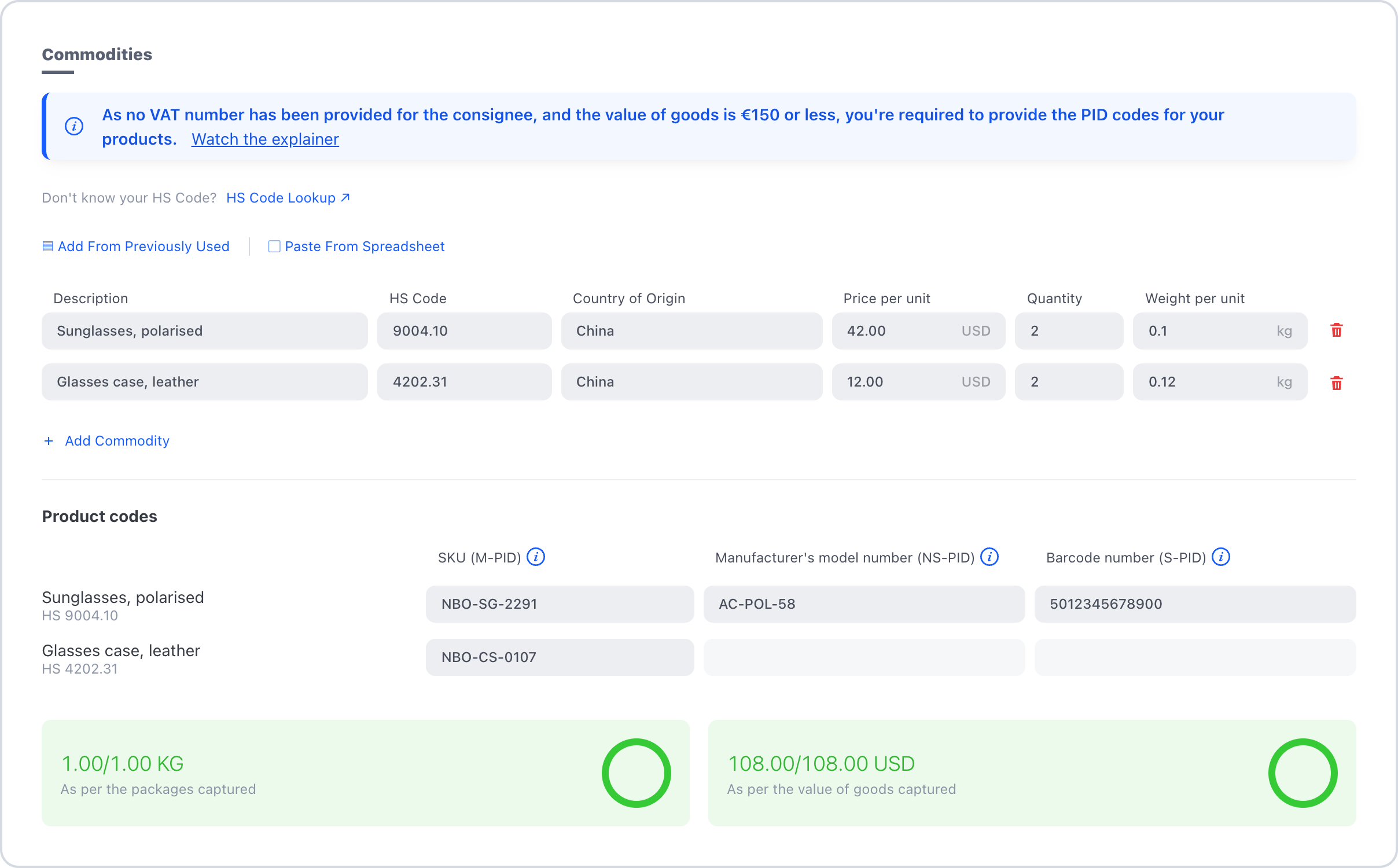
We save the codes with your products. Next time, pick the product from Add From Previously Used and its codes come with it.
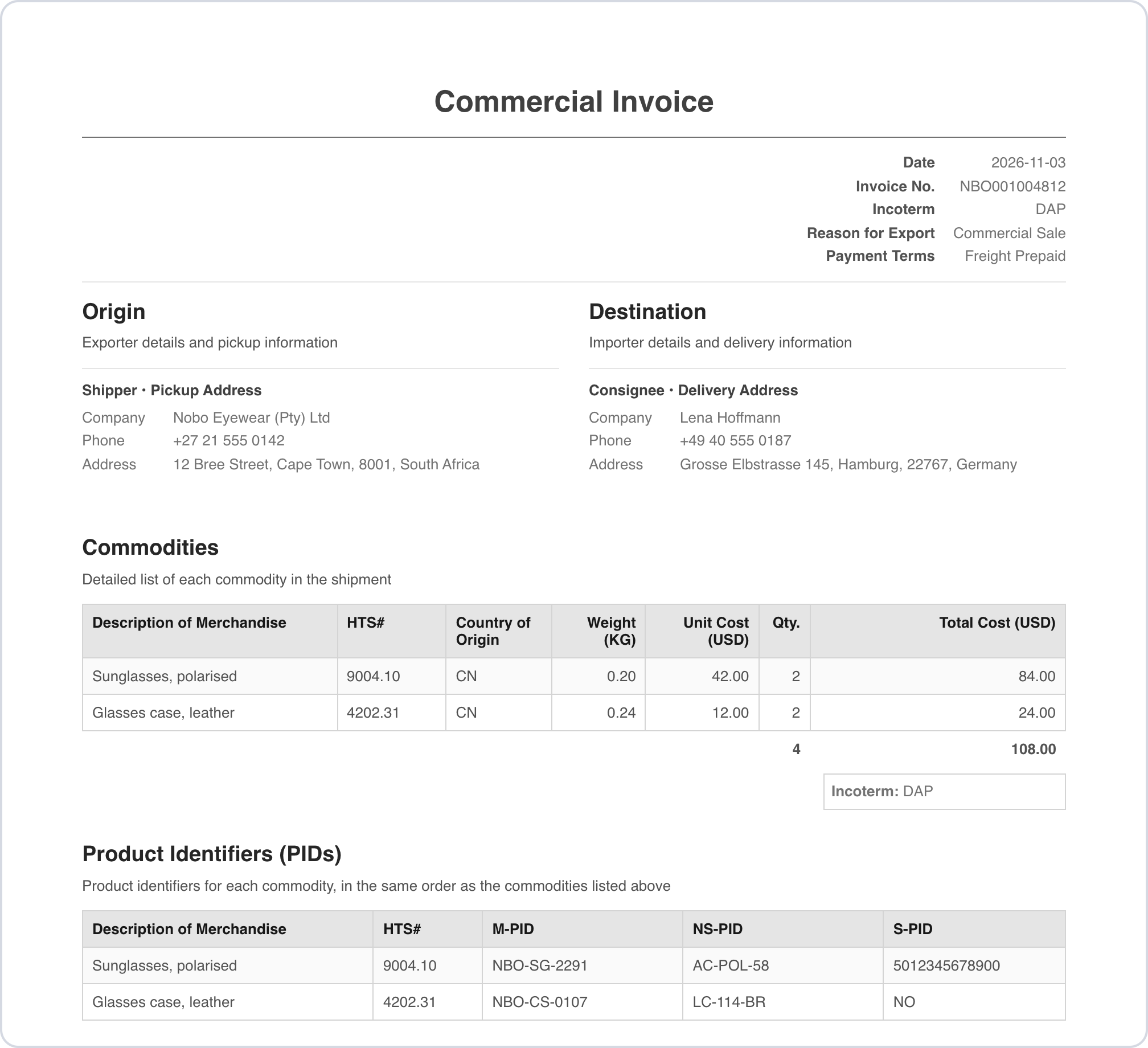
The codes print on the commercial invoice we create for the shipment, each in its own column, so customs gets them without any extra paperwork from you.
This article reflects the EU rules as published up to 10 October 2026, and we'll update it if they change. If you have any questions, just reach out to us.
Sources: European Commission customs guidance · FedEx EU PID guide
